Water Damage Restoration Santa Monica, CA
24/7 water damage restoration in Santa Monica, CA. The restoration team extracts standing water, dries the structure to the IICRC S500 standard and documents every step for your insurance claim.
(888) 563-9619Water coming through? Call Santa Monica dispatch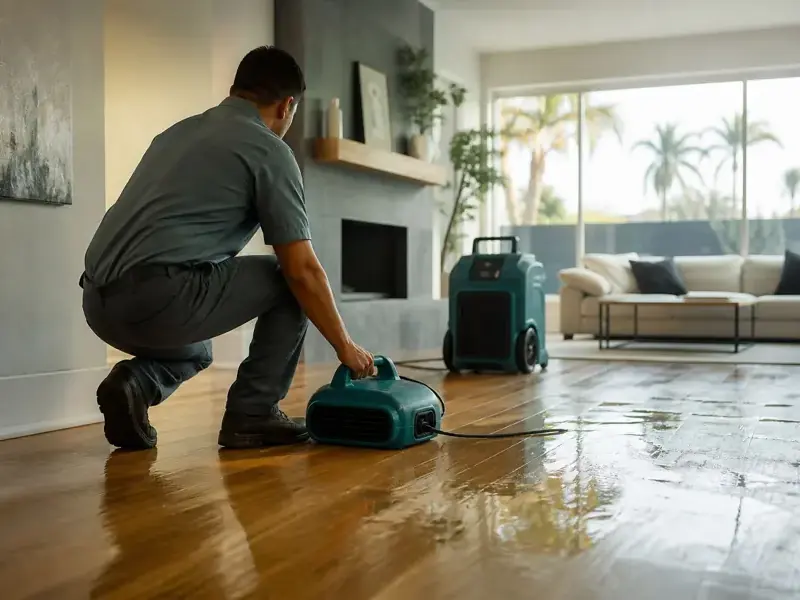
Santa Monica water damage pros, from the pier to North of Montana
Water damage in Santa Monica follows the housing. Most households live in stacked condos and apartments, so a leak rarely stays in one unit, and older Spanish-style homes carry plaster, oak floors and original tile bathrooms.
Every Santa Monica job runs in the same order: stop the source, chart the wet edge with meters, pull the water out, then run drying equipment until the numbers, not the look of the room, say it is finished. Structural drying, not just surface drying.
How the Santa Monica restoration crew worksWater Damage Restoration Services in Santa Monica, CA
Water and sewage losses only, from a single leaking hose to a flooded subterranean garage.
 Water ExtractionStanding water pulled out first, so it stops soaking pad, subfloor and drywall.View service
 Condo and Apartment Leak Water DamageUnit-to-unit leaks traced, mapped and dried across shared walls and ceilings.View service
 Burst Pipe Water DamageGalvanized and copper supply lines that let go inside walls, extracted and dried.View service
 Slab Leak Water DamageHidden leaks under slab floors, mapped with meters and dried from below.View service
 Ceiling Leak Water DamageUpstairs bathroom and plumbing leaks that soak drywall and plaster ceilings.View service
 Roof Leak Water DamageWinter storm water through flat roofs, parapets and tile underlayment.View service
 Storm and Below-Grade Flooding CleanupRunoff into low entries, garages and below-grade rooms, handled as dirty water.View service
 Water Heater Leak CleanupCloset and garage tanks that rust through or dump from the relief valve.View service
 Appliance Leak Water DamageWasher, dishwasher and refrigerator lines that fail inside a unit or home.View service
 Bathroom and Shower Leak Water DamageFailed shower pans, valves and grout in older tile bathrooms, dried behind the tile.View service
 Hardwood Floor Water DamageOak floors in older homes dried in place where the readings allow it.View service
 Sewage Backup CleanupCategory 3 backups from root-cracked laterals and old cast iron stacks.View service
 Structural DryingFraming, subfloor and wall cavities dried to a measured goal, not a guess.View service
 Commercial Water DamageRestaurants, offices, hotels and shops from Main Street to Wilshire.View service
What to do while the water is still moving
- 1
Stop the water
Close the fixture valve or the main shutoff if you can reach it safely.
- 2
Make it safe
Switch off breakers to wet rooms if the panel is dry, and stay out of water near outlets.
- 3
Tell the building
In a condo or apartment, call the manager or HOA and the unit below.
- 4
Photograph first
Take photos and video of the water and damage before moving anything.
- 5
Lift and call
Raise rugs, cords and boxes off the floor, then call so drying starts inside the 24 to 48 hour window.
What does water damage restoration cost in Santa Monica, CA?
In Santa Monica, CA, water damage restoration typically runs $800 to $10,000 or more, depending on the water category (clean, gray or black), how many rooms or units the water reached, the materials involved, such as plaster, hardwood or concrete, and how quickly drying started.
Minor, one area
- Contained clean-water leak
- Extraction and drying in place
- Daily moisture readings
Moderate, several rooms or units
- Unit-to-unit or burst line spread
- Ceiling, flooring or drywall removal
- LGR dehumidifiers
Major or contaminated
- Sewage backup or storm runoff
- Containment and removal
- Full structural drying
For a closer planning number, try the water damage cost calculator. The final price is set by the restoration company once it has seen the loss.
Water damage dried to the IICRC S500 standard
The order of the work is what separates a finished dry-out from a cosmetic one.
- 1
Map the moisture
Before a single fan is set, the tech who does the walkthrough scans floors, walls and ceilings with thermal imaging and pinless meters and draws the wet edge.
- 2
Pull the water
The extraction crew pulls standing water out through truck-mounted hoses or portable units, whichever reaches the unit, so it leaves the building.
- 3
Set the drying
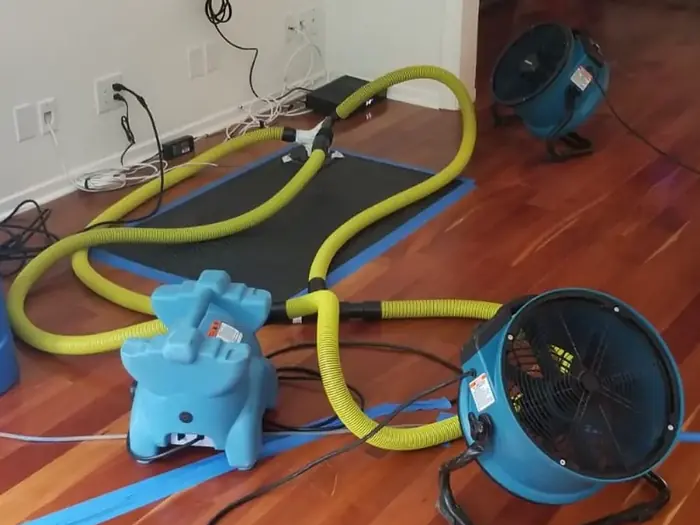
The drying team places air movers and LGR dehumidifiers room by room, sized to the load and to how damp the coastal air is that week.
- 4
Read, log, verify
Every day the readings go into a log, and the equipment stays until each wet material matches its dry reference within 2 to 4 points.
The gear a real dry-out runs on
- Truck-mounted or portable extraction for upper-floor units.
- Thermal imaging and pinless meters behind walls and tile.
- Air movers set to each room's evaporation load.
- LGR dehumidifiers, and desiccants for Class 4 materials.
All water damage categories covered in Santa Monica, CA
Category 1, clean water
Water straight from a supply line, a tank or a slab pipe. Caught early, most of it is pulled out and dried where it sits.
Category 2, gray water
Drain water from a washer, a dishwasher or a toilet without waste. Carpet pad and soft goods it soaks usually go.
Category 3, black water
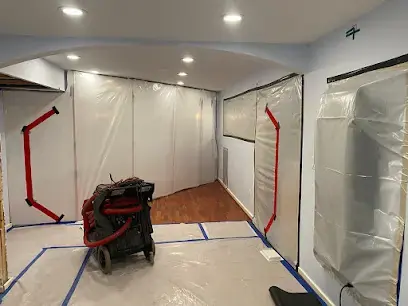
Sewage and outdoor runoff. The area is sealed off, porous materials come out, and every surface is treated before drying.
See sewage backup cleanupDocumentation for your insurance claim
A water claim is decided on the file. A complete file from the restoration team carries:
- The moisture map from day one
- Daily psychrometric and moisture readings
- Timestamped photos taken before any demolition
- The category and class of the loss, unit by unit in a building
Condo losses can involve an HOA master policy as well as a unit policy. Coverage depends on your policy, so it is worth checking with your own insurer.
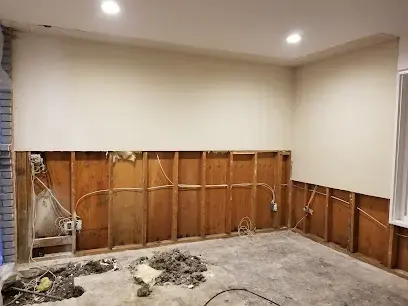
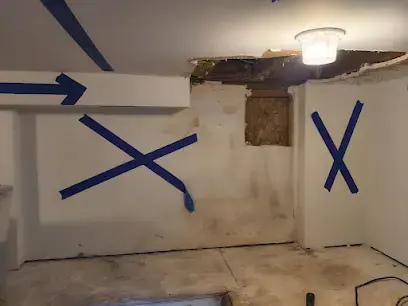
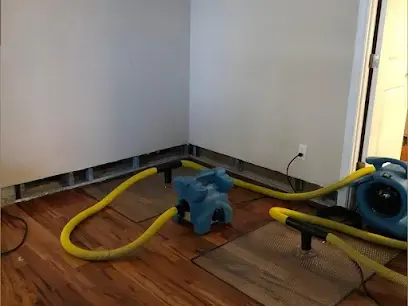
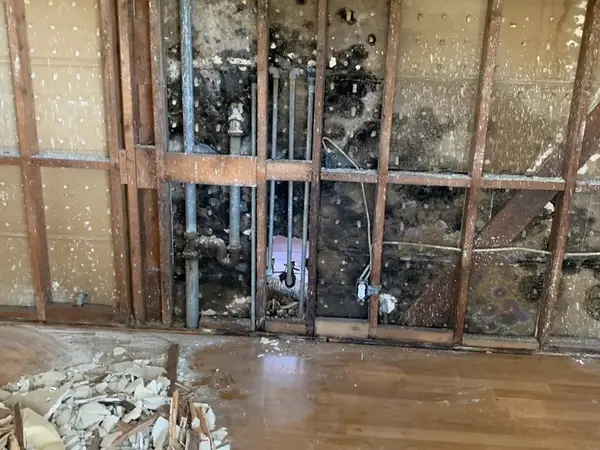
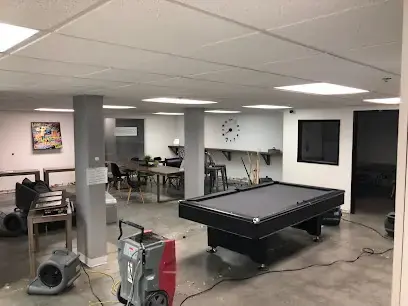
What a water damage dry-out looks like in Santa Monica
Water damage restoration across Santa Monica and the Westside
The restoration team covers every Santa Monica ZIP code plus Venice, Mar Vista, Brentwood, Pacific Palisades, West Los Angeles and Marina del Rey.
Street ZIP codes
PO box and unique ZIPs
Right on the city line with Venice, Brentwood or West Los Angeles? Call and say where the water is. The restoration team covers the whole Westside.
North of Wilshire
Downtown and the pier
Central and east
South of Pico
Neighboring Westside
One call reaches Santa Monica water damage pros, 24/7
The Santa Monica restoration crew handles extraction, structural drying and claim documentation across the Westside, day or night. Have the water source and the floor or unit number ready, because that decides how much equipment goes up the stairs.
Water damage in Santa Monica, CA: the local risk profile
Stacked buildings and 1920s homes inside, a damp marine layer and a few hard winter storms outside.
Stacked units and shared plumbing
- 1950s to 1970s buildings send leaks from one unit into the ceiling below.
- Galvanized lines and cast iron stacks fail inside shared walls.
1920s and 1930s homes
- Homes north of Montana and in Ocean Park have plaster, oak floors and crawl spaces.
- Original tile showers and root-cracked clay sewer laterals leak and back up.
Winter storms and the marine layer
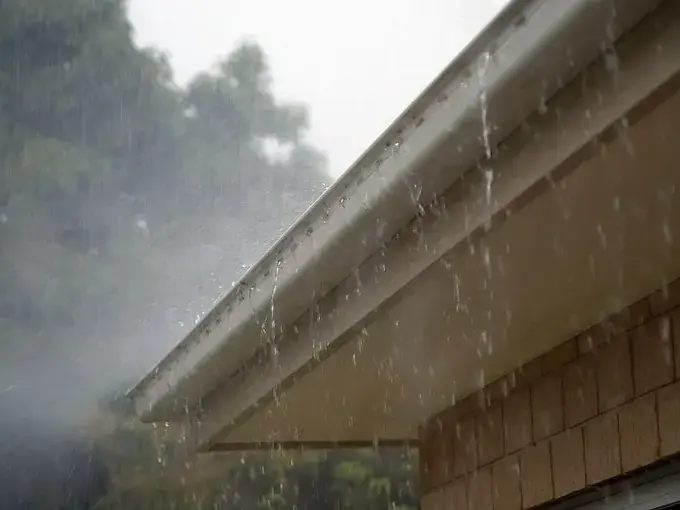
- About 13 inches of rain a year, mostly December to March, hits flat roofs and below-grade garages.
- May Gray and June Gloom keep the air damp, so drying leans on dehumidifiers.
Santa Monica water damage questions, answered
How fast can water damage help start in Santa Monica?
The restoration team works around the clock across Santa Monica and the neighboring Westside, and active water losses are treated as urgent. Standing water keeps moving into floors and walls, so the call matters more than the repair.
What is the first thing to do while water is still spreading?
If it is safe, shut the water off at the fixture or the main and cut power to wet rooms. In a building, tell the manager and the unit below. Photograph the damage, lift valuables off the floor, then call.
Why are unit-to-unit leaks so common here?
Most Santa Monica households live in stacked 1950s to 1970s buildings with shared plumbing, so a washer hose or shower pan in one unit often shows up as a ceiling stain below.
Does the marine layer really slow drying?
Yes. Humid coastal air slows evaporation, so the drying team keeps the area closed and relies on LGR dehumidifiers instead of open windows.
Is water damage covered by insurance?
A sudden, accidental loss such as a burst supply line is commonly covered after the deductible, while storm runoff usually needs flood coverage. Coverage depends on your policy, so it is worth checking with your own insurer.
How long does it take to dry a home or unit?
A one-room Class 1 loss usually dries in three to five days; oak, plaster and concrete take longer. Equipment comes out when readings are within 2 to 4 points of a dry reference.
What is the IICRC S500 standard?
IICRC S500 is the industry drying standard. It sets how losses are classified by category and class, how much equipment a room needs and how the drying goal is verified with meters.
What drives the cost of a water damage job?
The drivers are the water category, how many rooms or units the water reached, the materials and how long drying runs. Starting early keeps a loss at the low end.
Water on the floor in Santa Monica? Start the dry-out now.
Every hour of standing water pushes it deeper into pad, subfloor, plaster and the unit below. The Santa Monica restoration crew extracts, dries and documents, day or night.